
I’ve been thinking a lot about fear lately.
I have a very good entrepreneur friend who tells me he’s laying off many of his developers. There’s just no need for them anymore – AI is simply put doing a better job of it. In fact, you can try it yourself – go to Lovable.dev, and ask it to “create a landing page for my website on all things golden retrievers”. About 90 seconds later, there’s your website – mostly functional, just a few tweaks left. AI is a very powerful tool, one that I now find I can’t live without in my daily life. It’s chilling to think that these LLM’s are progressing to the point where they can produce code, document, find defects, and design systems architecture almost instantly – and as good (sometimes better) than I can. And it’s getting better every day.
Is it ok for me to say that this fills me with fear? What will happen to my family and I if I have to change careers? I’ve been in software development all my life. What if that, very suddenly, just goes away?
Unfortunately I have no crystal ball and I don’t know where my industry will be in five years. I do think about my girls, both 17 years old and starting to make their own way in the world. I have no idea on how to best direct them in terms of their career. It seems very likely that they will spend their twenties and thirties as I did, trying new things and failing, getting up and starting over.
So my wife and I are trying to teach them qualities that will help them succeed. Maybe we don’t know what kind of work they’ll be doing. But I can teach them how to work – that never changes. Things like how to take direction. How to actively listen. How to not make your boss’ life difficult. Being humble. Working hard, with purpose.
Listening to some of my colleagues talk about their fears this week had me thinking about what qualities I will need in the years ahead to adapt and be resilient. Here’s my thoughts:
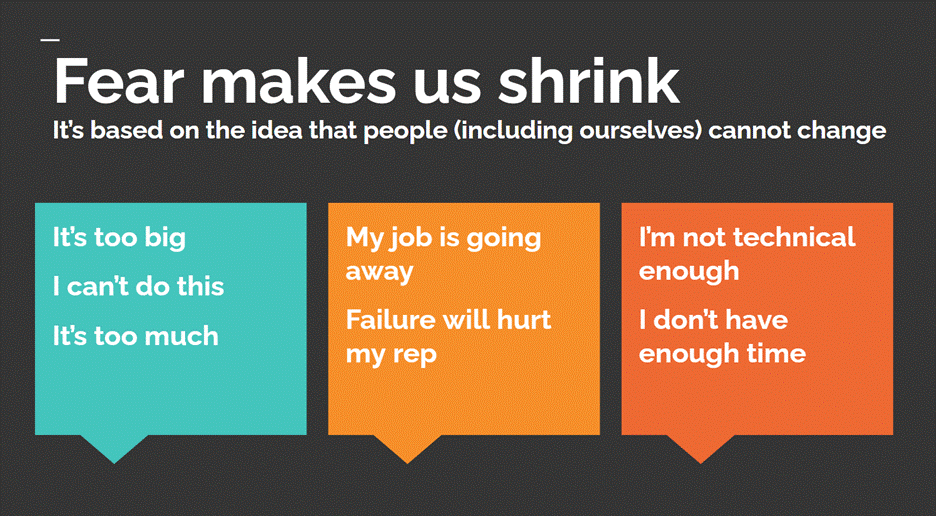
Every lie we tell ourselves comes with a short term benefit and a long term cost. In this case, the belief that we are past the age where we can change – I am what I am – is the greatest limiter at all. It’s comforting though, and that’s the short term payoff. This is who I am. I’m a victim of events beyond my control. I’ve never been able to do that successfully. That’s just not my forte.
Thoughts like this are comforting, in a weird way, because it promises familiarity, stability. I don’t have to change. The long term cost is – we have stopped learning, adapting. The world is changing – we are trying to stay the same. So we say things like “it’s too big” / “it’s too much”, “I don’t have the time”, “I’m just not a technical person”, etc.

Here I’m indebted to the book “Tiny Habits“, by BJ Fogg. Famously, he would do a few pushups after every time he went to the bathroom. Over time, and we’re talking months / years, he would ramp up the number of pushups. Guess what happened over time with his personal fitness level, from that really small incremental effort?
This really helped me when I found out I had diabetes. After spending some months being totally overwhelmed with the huge changes I had to make, I read this book. I remember closing it and saying to myself, I am the type of person that goes to the gym every day. So I changed that one thing, as a daily habit. Sometimes I would go to the gym and barely show up – like I’d put on my gym shoes and maybe walk for a few minutes. But I would show up. It made a world of difference in my health.
The point of this book, to me, is that big all-out efforts, like that New Year’s Resolution to drop 20 lbs in three months, almost always fail. It’s just too much change, too fast. But incremental, small changes in my habits – like reducing and then cutting out alcohol, or going to the gym – always win, if you stick with it.
The same thing was true when I wrote my book. I called my shot – started telling people, I’m an author. I’m in the middle of writing a book, it will be out in June. I can guarantee you, if I had not have put myself out there like that, the book would never have been written.
So what does this have to do with our mindset during times of epochal change like this one?

Bear with me a bit here. The five qualities above are each worth a blog article of their own. But short and sweet – if we accept that life is impermanent and constantly in flux, and we ourselves are constantly changing with it – then we are capable of adapting to anything, can learn and master ANYTHING we put our minds to. That’s an incredibly empowering thought. In fact, if we have a specific goal we want to accomplish – say, writing a book, or learning the piano, or getting more healthy physically – we can build a little habit and grow it steadily over time to reach that goal. And because we’re trying to learn like children do – without ego, without fear of failure, playing with new things and having fun – growth comes naturally. We’re learning from failure, and we’re persistent, because we have a clear goal and a solid plan. There’ll be days where we can do little or nothing, but we’re not going to burn out – because we forgive ourselves and realize plateaus are a part of life.
The fact is that AI is here to stay and it’s a disruptive change. It’s a threat, no question – but it’s also an opportunity. This is a great time to move away from the employee mindset, and think about creativity – making something new, something distinctively YOURS. AI and large language models are amazing tools, and they’re going to empower us to be creative and do meaningful, high impact work in ways we can’t even imagine. And the best part is, this field is brand new. The barriers will never be lower than this, the frameworks are still taking shape and will never be easier to adopt. So this is the perfect time to try something new in an exciting field where there’s nothing but upside. I can create and make art in my own way in this space, this month.
What new things will you try or learn about this month? I’m excited to find out!
 /* driftboatdave */