In my day job, we talk a lot about “modernization,” but let’s be honest: for most architects, that usually means a massive backlog of technical debt spanning several dozen repos. Modernization projects are fraught with danger and risk – nearly 35% of these projects stall because of complexity and a lack of resources. (Have you ever seen the famous “strangler fig” pattern actually strangle anything, in reality?) Legacy projects are daunting just due to the scale and the weight of the unknown has its own inertia.
That’s why the recent release of the Modernization Agent caught my eye. We’re moving into what’s being called Agentic DevOps, and it’s a total game-changer for those of us managing large portfolios. By using these AI agents to handle the “operational drag”—the upgrades, the migrations, the brittle pipelines—we finally get to get back to the work we actually enjoy: building what’s next.
The real “aha!” moment for me is the shift from single-app fixes to modernization at scale. Most of the attractiveness to me is with what it offers in the planning and assessment stages. Here’s what has me interested:
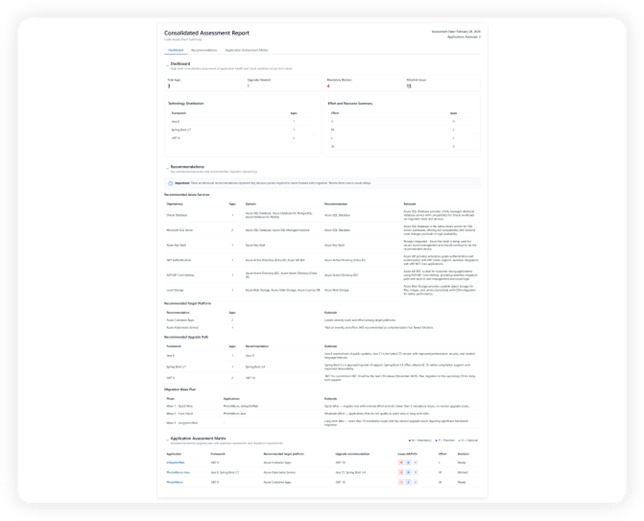
Estate-Wide Visibility: You can now run batch assessments across multiple applications at once. It’s not just a surface-level scan; it digs into deep code and dependency-level insights to show you exactly where the snags are before you even start. The assessment checklists look comprehensive and very well thought out:
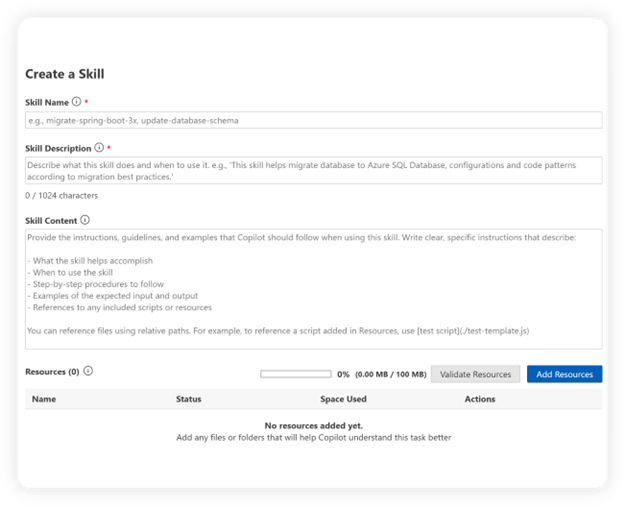
- Skills: One of the most powerful capabilities is support for custom skills, allowing you to tailor the agent to your organization’s specific processes, standards, and patterns rather than relying on a generic approach. Enterprises often have unique governance requirements, and custom skills let you encode business logic, internal frameworks, and compliance rules directly into the agent’s planning and execution. This enables consistent modernization by reusing proven migration patterns, enforcing coding standards, and aligning with organization-specific SDKs and practices. I could see this being a great place to capture and reuse successful migration patterns including org-specific SDKs or frameworks – i.e. no more having to hurdle the same obstacles each time you migrate a project.
- The Heavy Lifting is Asynchronous: Through the CLI, the agent coordinates with GitHub Copilot to handle tasks like upgrading Java and .NET versions asynchronously. It creates the issues, handles the PRs, and even scans for CVEs while you focus on the higher-level strategy. I especially love the support around unit testing.
If you’re ready to stop the manual toil and start scaling, I highly recommend checking out the Quickstart guide. It walks you through the interactive mode (the modernize command is surprisingly intuitive) for both Java and .NET.
- Deep Dive: From Single Apps to Scale Solutions
- Get Your Hands Dirty: Modernization Agent Quickstart
- See it in Action: Check out these demos on Scaling with AI Agents and Practical Modernization.
I’ve been working with the program team developing this and I’m really excited about its new direction and capabilities over the past few months. I’d love to hear if any of you are playing with agentic workflows in your own dev cycles. Drop a comment or reach out!
 /* driftboatdave */